Clyde, Georgia: The Forgotten River Community Time Nearly Erased
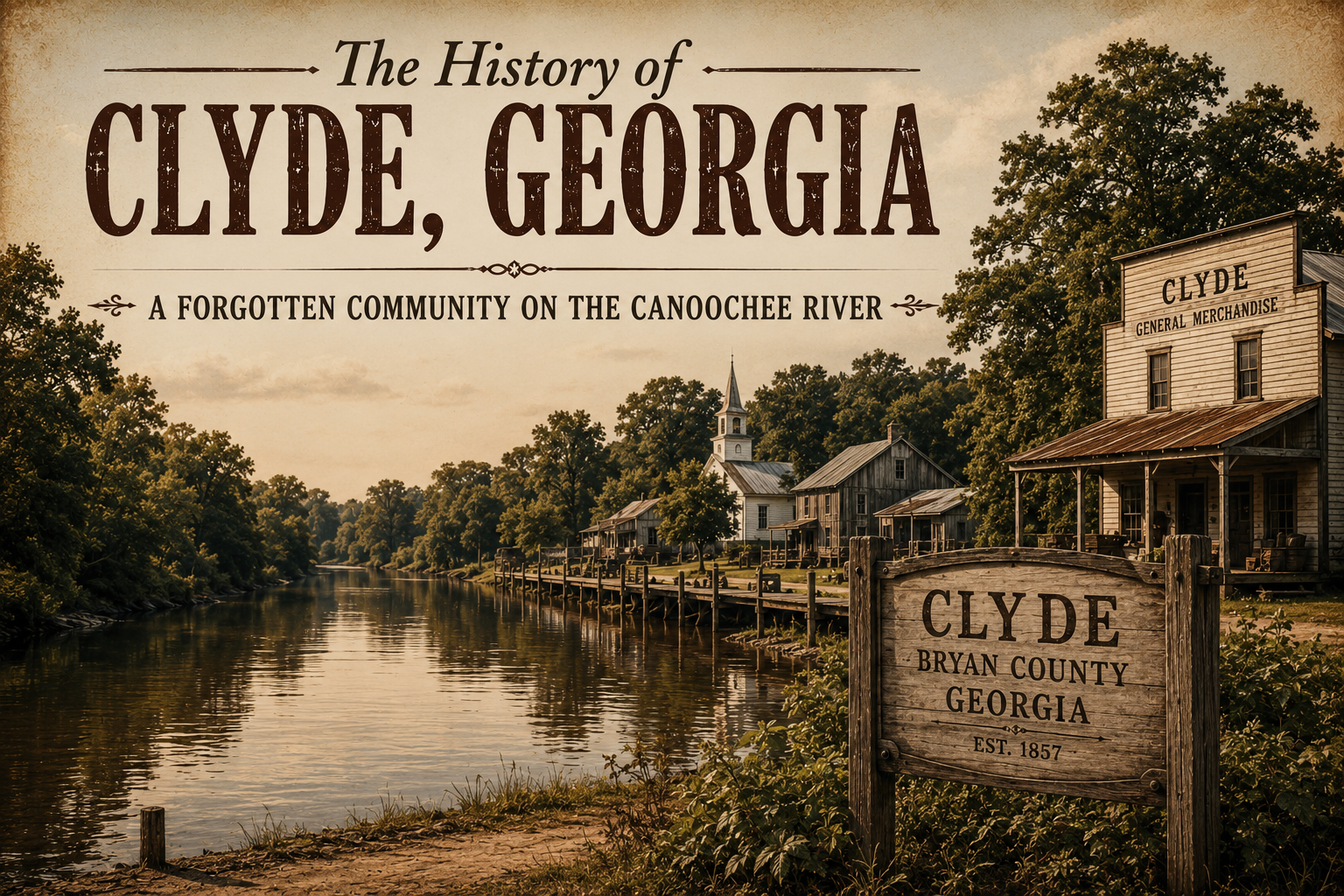
Hidden along the banks of the Canoochee River in southeastern Georgia is a place many travelers pass without ever knowing its name. Yet for generations, the small community of Clyde was a lively river settlement where timber floated downstream, boats tied up near the landing, and families built their lives around the winding waters that carried both goods and hope through the pine woods.
Though little remains to announce its former importance, Clyde’s story opens a window into frontier Georgia and the resilient people who helped shape the region.
A Community Built by the River
Long before paved highways connected south Georgia, the Canoochee River served as one of the region’s essential transportation routes.
Logs cut from the surrounding pine forests were floated downstream toward sawmills. Cotton, naval stores, and farm goods found their way to market by boat, while supplies arrived from larger towns closer to the coast.
For many families, the river was not merely scenery. It was a road, a workplace, a source of food, and sometimes the thin line between isolation and connection.
Communities like Clyde grew in the places where people could cross the water, load freight, trade goods, gather news, and build a future.
Life Was Never Easy
Living in nineteenth-century Clyde demanded grit, patience, and a deep dependence on neighbors.
Roads could vanish beneath mud after heavy rains, and flooding could isolate entire families for days.
In the humid lowlands, mosquitoes brought the constant threat of malaria and other illnesses.
Still, people stayed. They cleared land, raised children, tended crops, worshiped together, and helped one another through storms, sickness, and loss.
Churches were organized, schools opened, and the rhythms of everyday life revolved around hard work, faith, and family.
The Timber Boom
Perhaps nothing shaped Clyde more than Georgia’s vast pine forests.
By the late nineteenth century, timber crews worked throughout the region harvesting longleaf pine.
Massive logs were guided down the Canoochee toward mills and markets, feeding an industry that brought work, money, and constant movement to the countryside.
The forests that feel quiet today once rang with axes, saws, mule teams, shouted orders, and river crews working to keep enormous log rafts moving with the current.
A Community That Refused to Disappear
As railroads expanded and highways replaced river commerce, Clyde gradually lost much of its commercial importance.
Businesses closed, families moved elsewhere, and the river that once carried so much activity grew quieter.
But Clyde never truly vanished.
Today it remains one of those places that rewards anyone willing to leave the main highway, slow down, and listen closely to rural Georgia.
Old cemeteries, country churches, family names, and handed-down stories still preserve the memory of generations who called the community home.
Inspiration for Fiction
Places like Clyde remind us that history is not made only in famous cities, grand courthouses, or battlefield landmarks.
Some of the greatest stories happened in communities so small they rarely appear on modern maps.
While researching southeast Georgia, I found myself drawn to places like Clyde, where ordinary people faced extraordinary challenges, built families, weathered hardship, and quietly shaped the region’s history.
That fascination eventually found its way into my novel The Merchant’s Daughter, where the setting and spirit of nineteenth-century south Georgia become part of the story itself.
Although the characters are fictional, the landscapes, rivers, hardships, and determination of the people who settled this region are rooted in a very real past.
The Campfire Is Still Burning…
If you enjoy forgotten places, Civil War history, river towns, and the real stories behind my fiction, I would love to welcome you to The Author’s Camp.
Each month, I share historical articles, research discoveries, behind-the-scenes writing notes, and exclusive reader-only fiction—stories gathered around the same campfire that keeps places like Clyde alive.
Join today and receive your free short story instantly.